
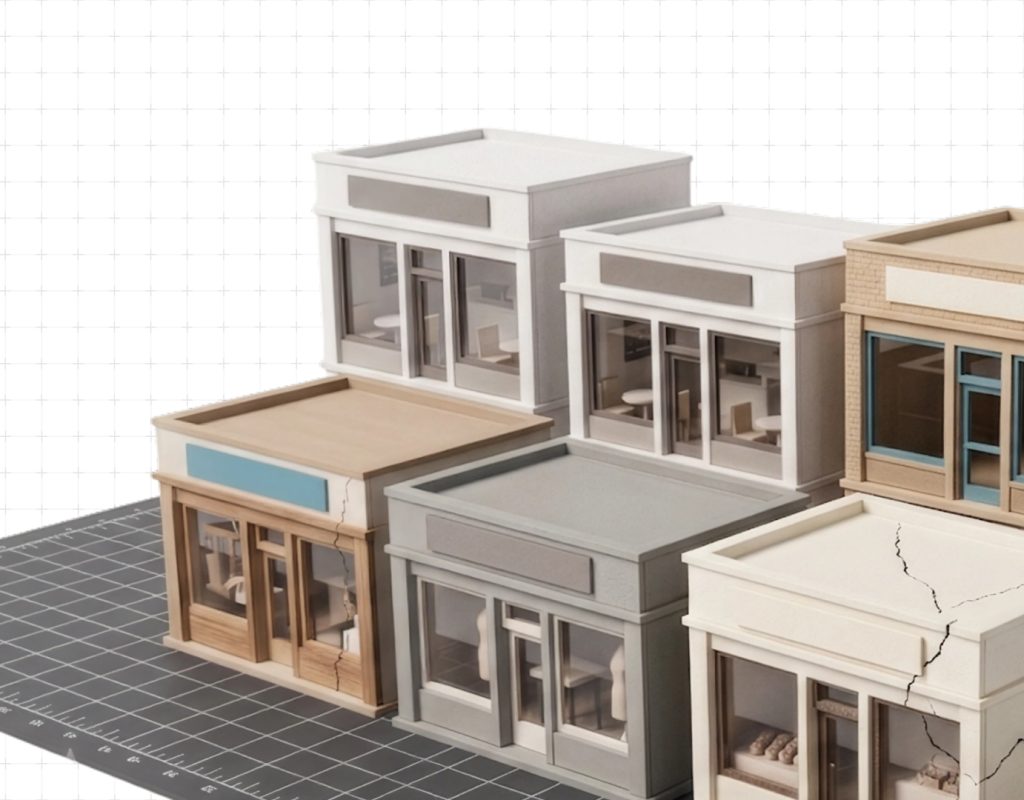
What changes when one project becomes fifty.
Even a single construction or renovation project can be complex. But with one location, the team can stay focused on one scope, one set of site conditions and one path toward approval.
Managing that same work across ten, fifty or a hundred locations is a different challenge altogether.
Whether the program involves new locations, renovations, accessibility improvements or broader capital programs, every additional project brings its own site conditions, documentation needs and approval variables. Many also introduce a different jurisdiction or review timeline. What works for one project can quickly become difficult to manage across an entire portfolio.
Most organizations don’t discover the limits of their process until they begin scaling. The question isn’t whether they can deliver one successful project. It’s whether they can keep dozens progressing toward construction at the same time.
Scaling Changes the Work
As portfolios grow, the work between defined scope and construction begins moving in multiple directions at once.
Documentation no longer moves forward as a single package. Permit applications may follow different review paths and timelines. Drawing revisions affect some locations while others continue toward approval. And a decision made for one project can influence dozens more already underway.
The nature of the work changes as well. Decisions that once affected a single project now influence schedules, documentation standards and approvals across an entire program. Maintaining consistency becomes just as important as maintaining momentum because every revision has the potential to ripple through multiple locations.
Teams stop managing individual projects and begin coordinating documentation, permitting, technical reviews and approvals that rarely move at the same pace. Each location continues moving forward, but the portfolio no longer moves forward as one.
Status Updates Don’t Show the Whole Picture
As programs expand, project status alone no longer tells the whole story.
Leadership needs more than a list of completed milestones. It needs visibility into where documentation is still evolving, which jurisdictions are waiting for revisions, how approvals are progressing and where decisions made for one location may begin affecting others.
That broader view matters because a schedule may show the dependencies without revealing how far their effects can travel. A permitting question in one jurisdiction may require documentation updates for future submissions elsewhere. A design revision at one location may affect drawing packages that haven’t yet been submitted. At scale, even a small change can ripple across the portfolio.
Without that broader perspective, isolated issues start influencing construction schedules, internal resources and business timelines long before they appear as project delays.
Keeping the Portfolio Connected
Visibility alone doesn’t keep projects aligned.
Technical documentation, permitting, compliance reviews, jurisdictional coordination and approvals all continue moving independently, but they still need to support the same business objectives. As more projects enter the pipeline, maintaining that alignment becomes an ongoing effort rather than a periodic review.
That responsibility can’t simply be spread across every discipline. Architects, engineers and other licensed professionals remain responsible for the work within their scopes. Governing authorities review the documents against applicable codes and requirements. Each party owns its role, but someone still has to connect the work.
That connection is where portfolio-wide accountability matters.
Organizations that consistently execute successful multi-location programs recognize that coordination is its own responsibility. Project information is centralized. Documentation and approvals remain visible across the portfolio. Decisions are evaluated for their impact beyond a single location. Issues are identified earlier, priorities stay aligned and projects continue progressing even as individual locations move at different speeds.
Construction Readiness at Scale
Completing one successful project demonstrates that a process works.
Scaling that process across dozens of concurrent projects requires an operating model designed for the work that happens before construction begins.
A coordinated preconstruction process keeps documentation, permitting, technical coordination and approvals moving together instead of as isolated tasks. It helps teams spot gaps earlier, coordinate decisions across locations and see more clearly how the entire program is progressing.
That becomes more valuable as the portfolio grows. With more projects, documentation can diverge, approvals can move unevenly and priorities can shift between teams. A strong preconstruction approach keeps the program aligned while allowing each project to respond to its specific site and jurisdictional requirements.
Ultima Build helps organizations coordinate that work through technical coordination, permit-ready documentation, permitting and approval management. By bringing those activities under one point of accountability, organizations gain the visibility and coordination needed to keep distributed portfolios progressing with greater consistency.